

Organic social media is one of the most coveted marketing platforms in the world, and it’s the one thing money can’t buy. Paid ads can get you impressions. Organic content is what builds a brand. It’s where trends live, where communities form, where something goes from zero to a million views overnight with no budget behind it. And the thing that makes it so interesting for startups is that organic content doesn't care how big your company is. A founder working out of their dorm room has access to the same platforms, the same audience, and the same shot at going viral as a billion-dollar corporation.
In fact, startups might have the edge. Big brands are boxed in by layers of approval, legal review, brand guidelines. Startups can move fast, take risks, and tap into internet culture in ways that corporate teams spend months trying to replicate. That dynamic creates this ripe space where founders can build real brands through content alone, no ad spend required. This week’s class was built around that idea.
Where We Are
We kicked off Marketing Series Part 1 with three speakers who each brought this to life from a different angle.
Yuchao Wang ‘25
Yuchao Wang ‘25 was one of our student founders from last year’s pilot cohort and the founder of Han Chung Classics. I met Yuchao early last year — we bonded over both having ecommerce brands and spent countless hours in the High Rise apartments sharing notes and bouncing ideas off each other.
I got a front row seat in watching Yuchao’s growth as a student-founder. At the end of last year’s Wesleyan Shark Tank program, I spoke with Yuchao to reflect on the experience and he said something that stuck with me.
”This class reignited the entrepreneurial spark for me” he told me. His experience as a founder had been increasingly tough at Wesleyan as he hadn’t found community or curriculum that matches his ambitions and with career decisions looming, he was on the fence about if it was possible to work on his company full time. This class was the first time he was surrounded by like-minded students going through the same unique startup experiences that he was.
Seeing him on the other side of the table now, presenting to this year’s cohort, was a full circle moment. He walked the class through his methodology behind content pillars — how he thinks about what to post, why certain formats work, and the analytics insights business owners need to understand. Few people know how to work the organic algorithm like Yuchao. He gets millions of views on his content and has never put a dollar behind any of it (see below). For a bootstrapped startup, that’s everything. What better proof that you don’t need a Fortune 500 marketing budget to build a real brand?

Louise Astorino & Evan Reeves — Not An Ad
Louise Astorino (Forbes 30 Under 30 + my cousin) and Evan Reeves (first hire at Jerry Media) are the co-founders of Not An Ad, a creative agency behind campaigns for Domino’s, Panera, Dunkin’, DoorDash, Lyft, Fanatics, and Paramount Pictures.
What stuck with me watching the class during their session wasn’t the content itself (which was phenomenal)— it was the reaction. Companies like Domino’s and Paramount can feel untouchable when you’re a student with a startup. They’re massive. They’re corporate. They feel like they exist in a completely different universe. But when you hear from the actual people making the content for those brands, it humanizes the brand — these are real people who are plugged into the same internet culture as the students sitting in the room. They’re riffing on the same memes, following the same trends, thinking about content the same way.
That realization was powerful. And it validated the whole thesis. Louise and Evan started their careers doing exactly this — making scrappy, on-trend organic content. Now they’re working with some of the biggest companies in the world, and the core strategy hasn’t changed. It’s still about understanding what resonates, being authentic, and being willing to be funny. The scale changed, but the playbook didn’t.
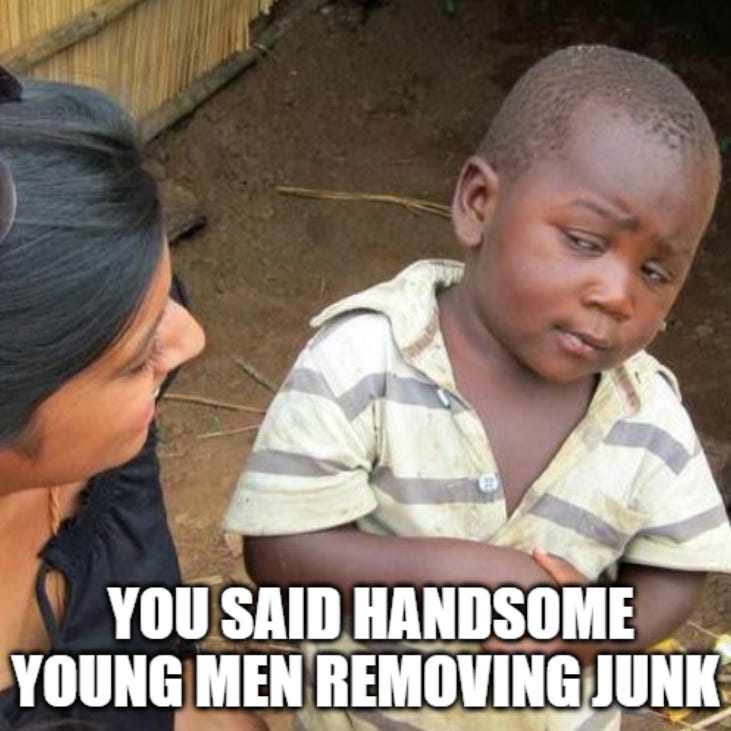
The meme exercise was a class favorite too. Louise and Evan had students create memes for their own companies using the same frameworks they use for their Fortune 500 clients. Here are a few from class:


Nelson & Spike
Today’s student-founder spotlight is Nelson Bellows ‘26. Nelson and his two co-founders are building Spike, a prediction market for short-form content. The concept is simple — you’re scrolling TikTok, you see a video, and you trade on whether it will go over or under what they call the “viral line.” So you might see an Alex Earle video, export it to Spike, and the platform generates a line at 10 million views. You think her hook is strong, you think the format is trending — you take the over.
It’s a business that lives entirely at the intersection of content and virality, which made this class especially relevant for him. Everything we talked about — how trends spread, what makes content resonate, why certain formats outperform others — that’s not just marketing strategy for Nelson. It’s the core mechanic of his product. He’s learning how to market a startup while simultaneously building a platform that depends on understanding exactly how content performs. Check out this week’s YouTube video to hear him speak on it.
Coming Up
I (Michael) am headed to Minneapolis for a big pitch for my company, Spacemilk. So, Palmer will be leading the session. Stay tuned to see what is in store!
Watch the Recap
🎥 Episode 4 HERE
Get Involved
🦈 Shark: Join our investor panel at the NYC event
🎤 Guest Speaker: Lead a session on your expertise
🤝 Mentor: Meet biweekly with a student founder (30 min, remote)
📈 Investor: Get connected with our founders
Interested? Email me: mastorino@wesleyan.edu
To infinity and beyond,
Michael Astorino